
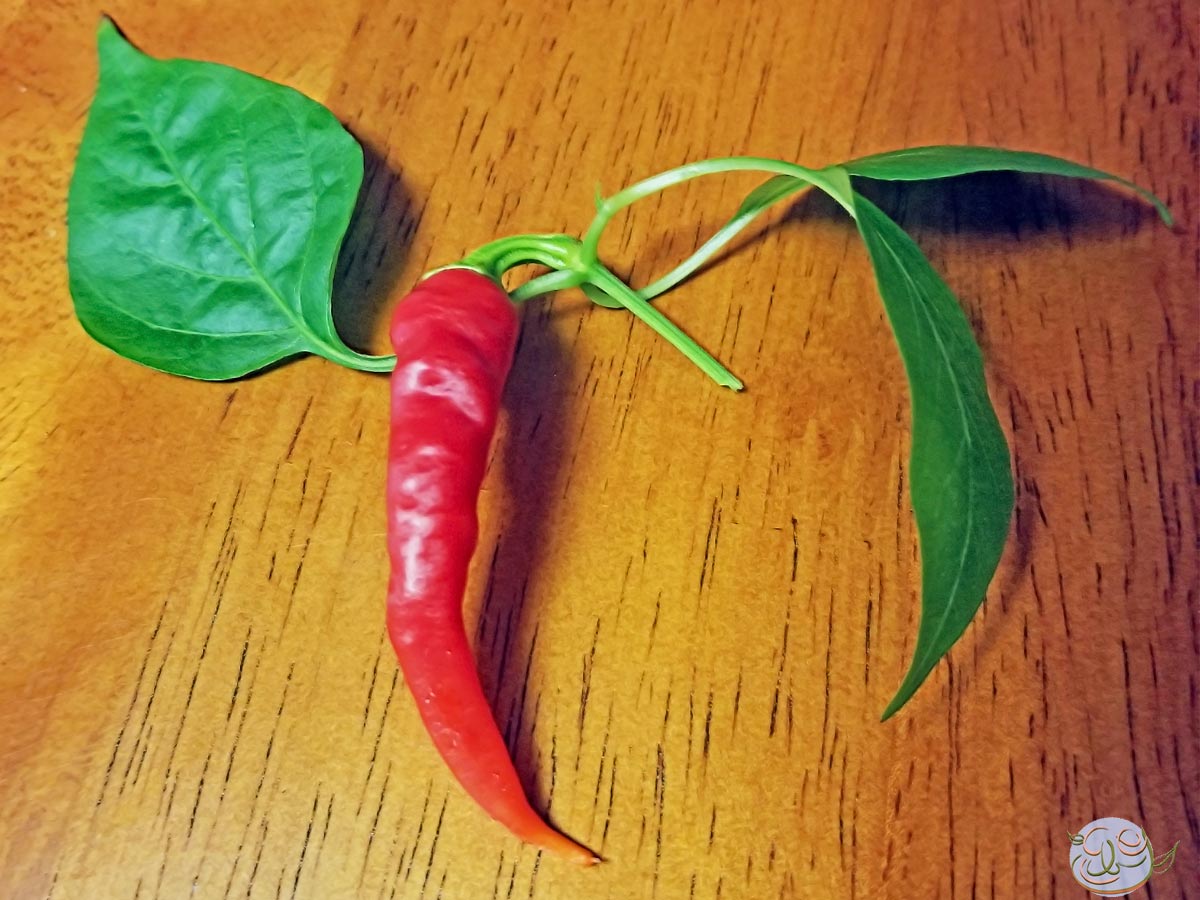
From the moment I moved in with my husband, he had long had basil and mint in the house. Though I had moved in with my Snake Plant (Dracaena (Sansevieria) trifasciata), we’d never seriously considered growing anything else. Enter my father. He had been growing cayenne peppers in pots for years at this point. My father became interested in growing these peppers after we took our one and only family vacation to Virginia. We visited the various historical sites around the state: Colonial Williamsburg, Jamestown, Yorktown, and Monticello. It was at Thomas Jefferson’s Monticello that my father became interested in the finger-long, spicy, cayenne pepper.
I shared my father’s interest in the gardens of Virginia, and Monticello in particular. In fact, it may be one of many reasons I ultimately decided to live in the state. I took copious photos of the gardens of the Governor’s Mansion in Colonial Williamsburg, the historical gardens of Jamestown, and – of course – the expansive gardens of Thomas Jefferson’s Monticello.

(Left to right, my father, my brother, and me at age 16)
(To skip the backstory and learn how to plant and grow the Thomas Jefferson Cayenne Pepper, you can skip down the page. It’s an interesting story, but I don’t mind, really.)
History of Thomas Jefferson’s Cayenne Pepper
Thomas Jefferson is well known for his work on the Declaration of Independence, service as the 3rd President of the United States, and for being the architect of the estates at Monticello. Lesser known is his tremendous impact on the cultivation of myriad species of fruits and vegetables in America. One of these was the Cayenne Pepper (Capsicum annuum ‘longum’) which he first planted at his birthplace of Shadwell in 1767. He later included them in his 1812 garden calendar alongside the “Major” and “Bullnose” varieties. The full version of the 1766-1824 Garden Book can be found online through the Massachusetts Historical Society.

The cayenne pepper is believed to originate from Cayenne, French Guiana. It was one of the first hot peppers to be grown in North America, and the first of many more that Thomas Jefferson himself later planted, including “Green” (Bell) and the Texas bird pepper.
Peppers of all kinds were frequently used throughout the Jefferson household. Many historical recipes that survive in the Jefferson family manuscripts list cayenne as an ingredient, such as tomato soup and salad dressing. The family physician even prescribed red pepper to soothe Jefferson’s granddaughters’ sore throats.
How I Acquired My Thomas Jefferson Cayenne Peppers
Although there is a gift shop on site at Monticello, my father didn’t buy any seeds while we were there on vacation. It was later that year that my father must have wanted to commemorate our one and only family vacation. He found the Monticello Shop online which carries Jeffersonian inspired products including heirloom garden seeds from the Thomas Jefferson Center for Historic Plants. He bought a package of Long Red Cayenne Pepper Seeds. Despite living in Northern Wisconsin, when the seeds arrived, he attempted to grow them in pots indoors.
His gardening progress on these cayenne plants was small, but largely successful. His plants produced many cayenne peppers over the course of the life of those plants, and those he planted afterwards.
When I introduced my then-boyfriend to my parents at their house for Thanksgiving in 2010, my father handed me an open, plastic sandwich bag containing approximately 10 cayenne peppers. He explained that he had grown them the previous season. He told me that the reason he didn’t have them in a Ziplock bag was because he was, “worried they might mold.”
Point of fact: I have rarely had this happen to me. However, this can occur if the fruit is too fresh and put into a container which doesn’t breathe (like plastic), which causes condensation. [Click here to learn more about saving seeds from your plants.]
My father said he gave these peppers to me “… to cook with, or, if you want, you can plant some seeds.” I gladly accepted this gift and brought it back to Indiana where I was living at the time. Because I was renting a house with no land to speak of, I put the seeds away for four years. Yet, in the back of my mind each growing season was that I should do something with those cayenne peppers.
Planting and Growing Your Own Cayenne Peppers
In the spring of 2014, I finally cut open one of the cayenne peppers my father had given me (of which neither I nor my now-husband had cooked with at this point). I planted some seeds in a potting soil mix. To my surprise, nearly all of the seeds germinated and became plants. I say it was a surprise because this level of germination success was a feat that my father had never managed when growing his. I’m not sure what my father did differently, but my method was extremely simple.
Planting Process:
- Pour some potting mix in a small pot with good drainage and a tray underneath – NOT a seed starting tray (see why in the next section below).
- Make holes in the potting mix with your pinkie finger to a depth of about your fingernail. (This ends up being a little more than a centimeter.)
- Drop 1-2 seeds in each hole. (If both germinate, you can thin them, or allow them to grow together – we’ve done both).
- Gently cover the seed with soil.
- Water until the water seeps through the small pot and into the tray underneath.
- Place on a windowsill that gets direct sunlight for at least a few hours a day.
- Germination should take place within 14 days.
Late March or early April seems to be the best time to start cayenne pepper seeds indoors. Thomas Jefferson himself agreed that April 1st was ideal (if you missed it, the image of his 1812 Garden Calendar is above) The first year I planted cayenne peppers, I waited to plant them until late May and that’s just not enough time for them to mature and produce fruit before the cold weather.
Cayenne Plant Germination
Cayenne pepper plants like to germinate freely. If you’re starting your seeds indoors, don’t start them in seed starters or seed starter trays. The mesh around the seed starters and the small space of seed starter trays binds the fine roots’ growth and causes dwarfism in the mature plants, especially if you don’t transplant them into their permanent homes early enough. Some plants can handle seed starters just fine, but cayenne plants are not one of them.
When I planted cayenne pepper seeds in seed starters in the Spring of 2015, I got the saddest little dwarf cayenne plants. They didn’t grow larger than about a foot tall and only produced a couple peppers a piece. While it was a better harvest than 2014, it was much worse than they deserved.

My favorite thing to use to germinate my cayenne pepper seeds is a decomposable peat pot that holds about a pint of soil. I usually put five peppers in each pot. When you use these, be careful not to overwater them. These pots are susceptible to white mold which can kill your young seedlings before they even get a chance at life. So sad!
Once your seedlings have begun to grow their secondary leaves, it’s time to transplant them into larger pots for their lifespan. Make sure the soil you’re starting with has plenty of nutrients like calcium. Cayenne peppers, like others in the pepper and tomato family, are susceptible to blossom end rot if they don’t get enough calcium in the soil. So start them off right.
Cayenne Pepper Blossoms

In general, blossoms appear about 2 months after planting. Blossoms are white with 5 petals and grow from nodes that occur at branches, places where the pepper plant produces new leaves.
Fruit – yes, peppers are technically a fruit – generally appears about 3 months after planting. Blossoms that remain on a cayenne pepper after it has fruited can choke it of nutrients needed to grow to its fullest potential. Watch your cayenne plants carefully when they’re providing fruits to catch any blossoms that detach from the stem and remain fixed around the pepper. Be sure to remove these from the pepper (preferably way before I caught this particular pepper’s blossom!).

Harvesting Cayenne Peppers
Our first year’s harvest was very small, but it was more than enough to provide a return on investment. 15 cayenne peppers came from the one cayenne pepper pod that I had cut open. Because I had planted indoors, I kept the plants going long into the winter.
Cayenne pepper plants, like all pepper plants, absolutely hate the cold. However, if protected from the cold and given a window with as much sunlight as you can, Cayenne plants can last upwards of two years! That’s even without artificial sun lamps (though, that certainly can help). That first year’s planting, the winter weather chilled the window where the cayenne pepper plants were sitting on the sill. As a result, the fruit became smaller and smaller.

Plant Epigenetic Memory
Our first harvest was small for a few reasons. In addition to the fact that I planted late, there was another factor in play. Despite the fact that my father had obtained his own seeds from Thomas Jefferson’s Monticello, the seeds I planted had come from my father’s plants. He had been growing these plants for nearly a decade, and plants remember genetically where they came from. This is called Epigenetic Memory. These seeds had come from generations of plants more disposed to Wisconsin’s length of season and daylight. When I planted those seeds in Indiana that first year, they likely didn’t know what to do with the longer growing season and more direct sunlight.
As I learned what cayenne pepper plants liked and disliked, I learned how they wanted to be treated in order to produce maximum results. In the process, year after year, I was altering the epigenetic memory. In effect, creating my own crop more disposed to Indiana’s climate. And so we ended up with greater harvests over time.

The right three jars and the bowl in the middle contains the 2019 harvest.
Now that I have moved to Virginia, effectively returning the plant to its “native” location, I expect I will see a brief drop in productivity which will pick up again after a generation or two.
Insect Susceptibility
Cayenne pepper plants are susceptible to both aphids and spider mites. And, if the soil remains too moist it can attract fungus gnats.
Aphids tend to attach themselves to the blossoms and suck them dry before they have a chance to produce peppers. If you see ants on your plants, check your blossoms for aphids. The two creatures have a symbiotic relationship.
Spider Mites attach themselves to the undersides of leaves and branches of the pepper plants. They kill the plants with the death of a thousand bites, practically suffocating the plant, stealing its energy reserves stored in its cell walls, and preventing its ability to photosynthesize. If you see webbing on the leaves and stems of your cayenne plants and black spots on the leaves, you have spider mites.

Fungus Gnats are a big problem for young cayenne plants, but less so for adult plants. Fungus gnat larva eat at plant roots and can stunt growth or even kill young plants. Adults can become nuisances indoors and lay eggs to produce the harmful larva in the soil. Water only when the soil is dry an inch down and you’ll reduce fungus gnats and larva.
Full Circle
These cayenne peppers did come full circle, by the way. My father had gifted me with his own cayenne peppers in 2010, and my gift to my father for the 2016 holiday was a bottle of cayenne pepper infused olive oil from my own cayenne peppers. Cayenne pepper oil makes a great dip for fresh baked bread and, when used a teaspoon at a time, to fry eggs in.
I had allowed my own home grown cayenne peppers to infuse in olive oil for a year, which my husband and I sealed with wax before I sent it to him. I typed up the story I’ve shared with you here to tie around the neck of the bottle. It made a perfect personalized gift for the holidays. [Make your own infused olive oils for a personalized gift to friends and family!]

First and Favorite Fruit at Eastborn Gardens
Cayenne plants were some of the first plants I grew. It was my first attempt to combine history and stories with my own gardening enjoyment and produce food that I can (and do) cook with. They have helped me feel closer to our own national history and Thomas Jefferson’s historic gardens at Monticello.
If it weren’t for our success with these easy-to-grow plants, I might not have tried any of the plants I later experimented with. I certainly wouldn’t be blogging about my successes today. So, you can thank these wonderful, spicy beauties for the reason I’m writing today.

Related Reading
The Thomas Jefferson cayenne peppers have inspired me more than just in growing, harvesting, and cooking. They’ve also been a subject for my many art projects. Check out this article posted for World Art Day 2024: A Garden of Expression!


9 responses to “Thomas Jefferson’s Cayenne Peppers”
[…] Succulent plants like herbs and vegetables are the most vulnerable. Tropical houseplants typically have a waxy membrane over their leaves that makes it difficult for mites to attack them. I have found spider mites on a variety of different plants including a miniature rose bush, basil, mint, and my Thomas Jefferson cayenne pepper plants. […]
[…] visited Thomas Jefferson’s Monticello. (I wrote about that visit briefly in a post about the Thomas Jefferson Cayenne.) But seeing the gardens at Mount Vernon was a distinctly different experience. There are a lot of […]
[…] Peppers (including hot varieties like cayenne peppers) […]
[…] a previous post about the Thomas Jefferson Cayenne Pepper, I mentioned that I’d made a bottle of cayenne pepper infused olive oil as a holiday gift for […]
[…] we started the year off poorly with fungus gnats, and later spider mites, on the indoor Thomas Jefferson cayenne pepper plants. Both insects are common indoor plant pests. In our case however, it was just too much for the […]
[…] battling spider mites on our indoor Thomas Jefferson Cayennes, we removed those plants entirely from our garden rotation last year. So, we’re ready to […]
[…] illustration started as a means of identifying a plant. In the spring of 2014, we had planted Thomas Jefferson Cayenne Peppers for the first time. Back then, we often used our patio to plant our seeds in small seed starters […]
[…] summer. We received rich rewards of peas, herbs, and soooo many tomatoes. We had started growing cayenne peppers indoors at first, but a strange looking plant sprouted up and grew into something that was very […]
[…] Jefferson (3rd President of the United States) also planted Bird Peppers and Cayenne Peppers. We grow both of these at Eastborn […]