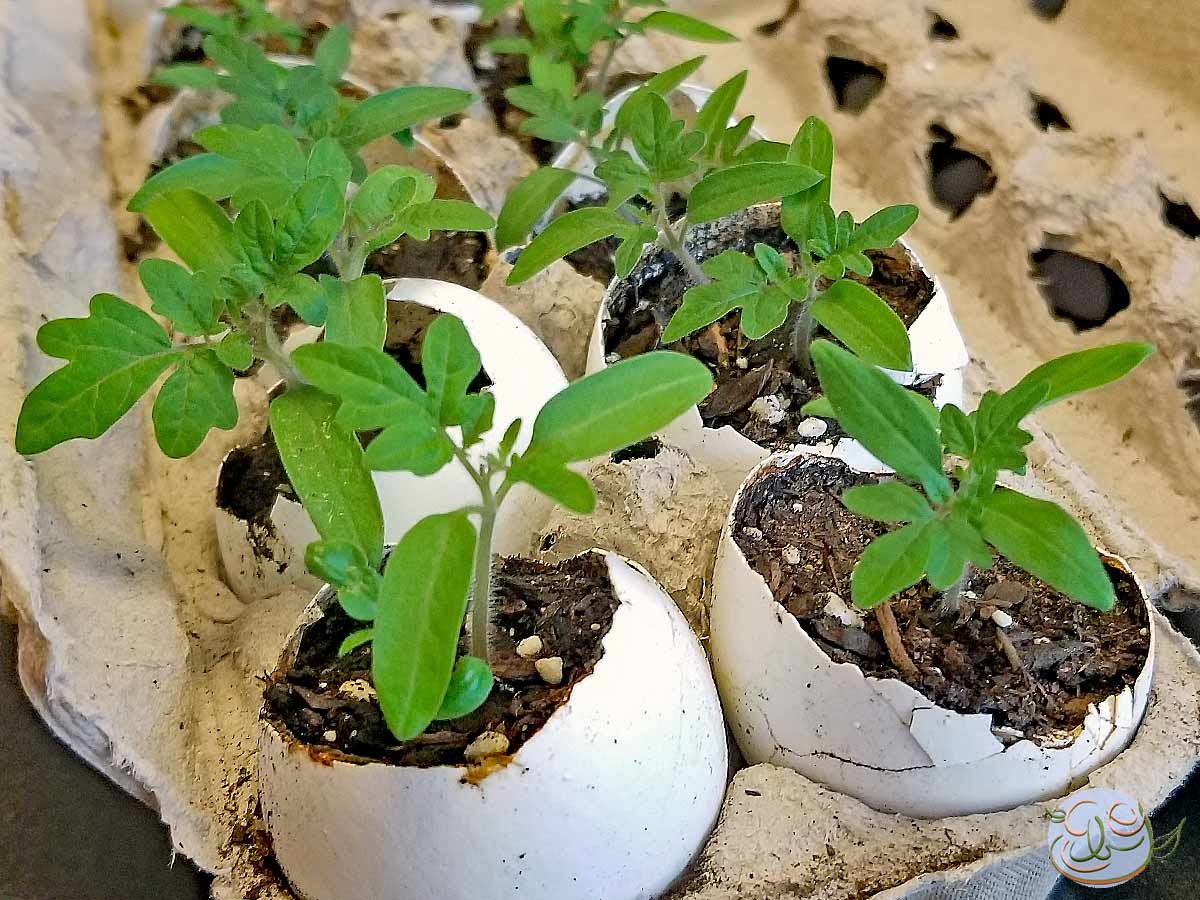

When you grow plants in your garden, they’re egg-stracting nutrients from the soil and transforming it into vegetables, fruit, and flowers. When we harvest, we’re also removing those nutrients from the garden itself. After a while, your garden may start to suffer if you don’t fertilize to replenish those nutrients in the soil so your garden (and your table) can continue to thrive. One of the most important nutrients for many fruiting plants is Calcium. Adding eggshells to your soil is a egg-cellent way to return calcium to your garden.
As a side note: I’d like to apologize for the amount of egg puns in this post. … I mean, I’d like to, but I won’t. This was just too much fun to write. Consider this an egg hunt. How many egg-regious puns can you find?
Why Add Eggshells to your Garden
You don’t have to be an egg-head to understand that calcium is important for a garden. Eggshells contain 96% calcium carbonate (CaCO3). So they’re a great source for calcium. In the garden, many plants can’t set fruit properly without calcium, causing problems like Blossom End Rot (BER).

A common tomato problem, when BER sets in, the end of the fruit where the blossom used to be starts to mold as the tomato ripens. Fruiting plants in soil that lacks calcium are at eggs-tremely high risk of BER. While tomatoes are the most popular subject of BER, it also affects a large variety of fruiting plants including squash, peppers, and melons. Adding calcium to the soil shows BER the eggs-it and prevents it from becoming a problem in your garden.
Earthworms also benefit from eggshells. Pulverized eggshells act as grit in earthworms’ stomachs that helps to break down what the worms ingest. It also helps to keep the soil at a comfortable pH that earthworms can get egg-cited about.
What Plants Like Eggshells?
Plants that like an alkaline soil benefit from eggshells. The calcium in eggshells acts a lot like lime and can increase the pH of your soil, making it more alkaline. Some plants that like alkaline soil and benefit from egg-stra calcium are: tomatoes, cucumbers, zucchini, peppers (even hot peppers), squash, strawberries, and even flowering plants like pink hydrangeas.
Ericaceous plants, plants that prefer acidic soil to alkaline, are plants that find eggshells eggs-hausting. Ericaceous plants need high acidic, low alkaline soil that’s also high in iron so that they can absorb nutrients. Some common ericaceous plants include: rhododendrons, camelias, azaleas, and even fruiting bushes like blueberries, raspberries, and blackberries.
How to Prepare Eggshells for the Garden

Eggshells are great for the garden, but, how you prepare them can make all the difference. It’s no good to add eggshells to your garden only to have the calcium remain locked up where your plants can’t use them. So let’s hatch a plan to make the most of your eggshells:
Sterilize Your Eggshells
If your childhood household was anything like mine, you have probably been told of the dangers of salmonella from a very young age. Even if you didn’t get that education from your parents, the monthly news stories about food recalls due to salmonella have practically made the bacteria a household name (or is that just a U.S. problem?). As you might imagine, the FDA has a particularly great resource on salmonella.
Salmonella bacteria are commonly found in raw eggs. And it can remain on eggshells that you save for the garden. So it’s a good idea to sterilize your eggshells before adding them to your garden soil if you don’t want egg on your face. After all, your garden is probably producing food you’re going to eat, and you don’t want the bacteria to come full circle.
Baking and Boiling
Sterilize your eggshells before adding them to your garden by applying a little heat. There are several ways to do this, of course, but some are easier than others. So, Let’s eggs-plore:
If you’re throwing your eggs into a hot compost, it will do the sterilizing for you. A hot compost’s job is to make bacteria like salmonella eggs-tinct. Just make sure your compost gets as hot as 141 to 151 degrees Fahrenheit (60 to 68 degrees Celsius).
If you don’t have a compost that gets hot enough, you can still use eggshells in your garden. Just place them on a cooking sheet and turn your oven to 200 degrees for an hour or so to kill any bacteria that might eggs-ist.

The easiest method by far is to boil your egg shells in hot water on a stove. If you’re making boiled eggs for a salad or snack, you’ve already sterilized the eggshells during the cooking process. So there’s nothing left to do! Also, as an added bonus, boiling your eggshells will speed up the calcium composting process. Some of the calcium in your eggshells will literally come out of its shell during the boiling process. Set the egg water aside and let it cool then water your plants with it. Easy!
Make Eggshell Powder
Not to beat anyone down, but no matter which method you use to sterilize your eggshells, you should pulverize them. As written above eggshells slowly release calcium. Whole eggshells can take years to fully break down. So, if you’re looking to speed up the process, you really need to grind your eggshells. Here’s why:
Grinding your eggshells increases the surface area of the shell to the outside environment. This means it takes less time for the composting process to egg-spell the calcium from the outside in.

If you boil your eggshells to further shell out the calcium-enhancement to your soil, I also recommend grinding your eggshells before boiling them. Because more of the shells’ surface area is exposed to the heat and boiling water, you can egg-spect more of the calcium to leach out into the water. This doubles your efforts!
To pulverize eggshells, there’s a couple ways to go about this eggs-ercise. You can use a classic mortar and pestle to grind them to a powder by hand. Or you can put a bunch of them in a plastic storage bag and crush them from the outside with your hands then place the pieces in a coffee or spice grinder. If you go the coffee/spice grinder route, as a bonus, the eggshells will also sharpen your grinder blades and make it more efficient.
How to Add Eggshells to Your Garden
So, you have your pulverized eggshells and maybe even some egg water set aside to give your garden some water. You’re ready to egg-celerate your garden game. But how?!
When
As mentioned above, eggshells take a long time to break down and release their calcium into your garden. Because it takes so long, adding eggshells into your soil in the autumn can’t be beat. Just sprinkle powdered eggshells onto your garden soil and till it in with a hoe, rake, or trowel. The eggshells will start to break down a little over the winter, and will be ready to go when the soil warms in the spring.

You can also add eggshells to the soil when you plant in the spring. When either direct sowing or transplanting seedlings outdoors, treat your soil first by tilling pulverized eggshells into your garden soil. It’s even an egg-ceptional idea to sprinkle ground-up eggshells into the hole that you dig for your seeds or seedlings before adding your plants. That will make it easy for the plants to reach the calcium when it finally seeps into the soil.
Where
Obviously, the soil is the ultimate place for calcium. However, you don’t have to wait until there are no plants to treat your garden with eggshells. The egg-ception to the rule is to use the above technique of grinding then boiling your eggshells, then water your plants’ roots at the soil level. Some powdered eggshells will remain on the topsoil, but that will quickly work its way into the soil when it rains and when you water your plants.
How Much Calcium is Too Much?

All yolks aside, it is possible to add too much calcium to the soil. Too much calcium will result in locking up other nutrients that plants need like potassium, phosphorus, magnesium, and nitrogen. If plants can’t get these nutrients, their leaves will appear a sickly yellow, purple, or brown.
Soil tests can tell you what your soil is missing, or has too much of. But you can also just eggs-periment on your own by adding and reducing certain nutrients and observing how the plant responds.
That’s All, Yolks!
I hope this post hasn’t left you in shell shock or your brain too scrambled. We really aren’t that egg-centric! Eggshells are a great way to add calcium to your garden soil and will improve your plants’ output over time. Leave a comment and let us know how many egg puns you found in this post. And if you try eggshells in your garden, let us know how it worked for you!