
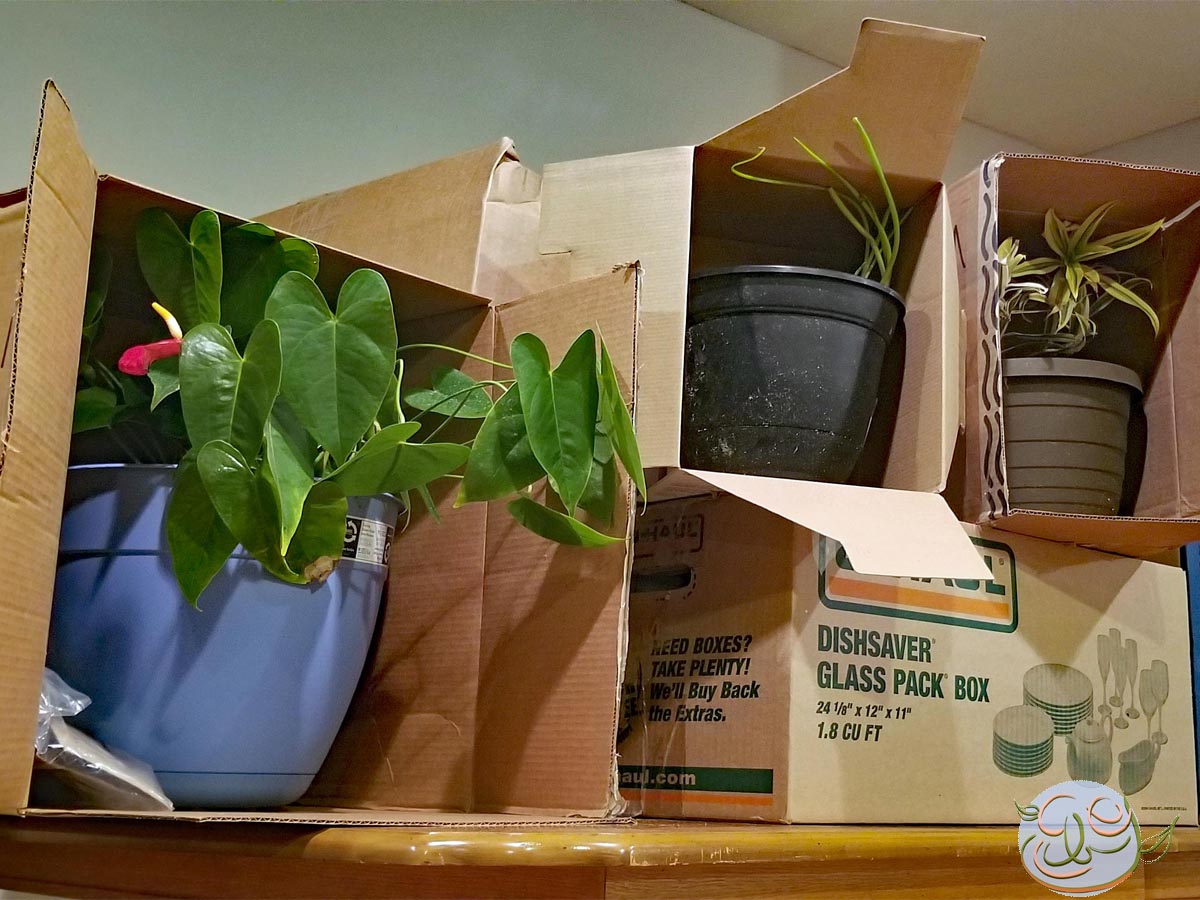
For years, my husband and I dreamed of moving to Northern Virginia where we can build our forever home. We imagine a massive library, an expansive kitchen, and sweeping gardens to provide our kitchen with fresh produce. We imagine the gardens cultivated in the colonial style so common in early Virginian estates. As avid readers and gardeners, and passionate dreamers, for years, we have aimed to make our dream a reality.
Slowly, painfully slowly, we maneuvered the chess pieces of life in such a way that we could achieve our goals. We were all ready to move in the spring of 2020 when the COVID-19 pandemic struck the world. For two years we bunkered in our rental, cleaning every surface and dutifully wearing masks in public. All the while we waited impatiently for the world to go back to some semblance of normal. We had no desire to put down roots where we were. But during the pandemic, we were a lot like our plants: stuck in a container, waiting to break free.
Here we are one year later! We made it to the eastern seaboard, and we moved with our plants in tow. It took us more than a month but, we moved our entire container garden long distance over the Allegheny Mountains. Almost every single plant that we transported from one state to another survived the journey. How did we do it? Read on for the secret to our success.
Seeds From the Green Place: Save Seeds Now to Replant Later
The subheading title is an homage to Mad Max: Fury Road. When Mad Max’s party meets a band of travelers in the desert, one of them is carrying a precious chest. Forced to leave their fertile land when it died from global warming, one woman gathered all the seeds she could. She stored these in a chest for safekeeping while they traveled the desert in search of a new home.
If you think far enough in advance, you can collect seeds from your favorite plants before you move. This does depend on the type of plants you have and what time of year you’re moving. But seeds can be a way to save your plants for replanting when you arrive at your new home.

Flowers from landscaping, raised beds, window boxes, or planters are ideal candidates for seed saving. As are most vegetables and fruits. Make sure your seeds are dried properly before putting them away. Lay out any seeds you gather on paper towels for a day or so once you harvest. This will help eliminate of any remaining moisture that may cause them to mold. Use a container where your seeds will be dry and cool (but not cold!) until you’re ready to plant them at your new home.
Piece by Piece: Cuttings are Easier to Move Than Whole Plants

Not all your eggs need to be in one basket. In fact, in some cases, it’s better if they’re not. Many plants can be propagated through cuttings in water which can then be transported in jars. Large plants in pots are especially difficult to move. They can be heavy or too large to fit in a car, truck, or moving van. Inground plants may be impossible to dig out and bring with you. However a cutting can bring your old landscaping with you wherever you go.
If your new digs won’t support more than your one plant, you can gift them. Cuttings make great presents for friends and family that you may be leaving behind. Your loved ones can have a piece of your beloved garden to remind them of you. Your divided plants will grow at the same rate across the miles, further connecting you together despite the distance. Plus, it’s a great conversation point when you chat or text each other.
How To Pack Cuttings In Water For Your Move
First, do your research! Some plants may need a little help of a rooting hormone, and not all plants can propagate by cuttings. Be sure to do a little research before you hack up a beloved plant prior to your already stressful move.
When we moved across country with our plants, our Anthurium was much too large to travel with us as one cohesive plant. After a month of experimentation prior to the move, I realized it was a prime candidate to move as cuttings. We used empty Ball mason jars, the kind used in canning, to transport a total of 10 Anthurium cuttings.
Whichever kind of container you use, you’re going to want to prevent spills during your drive to your new home. Even if the water in your jars isn’t near the surface, liquid can crawl up the sides and spill. This is called capillary action. To see for yourself, place a clear straw in a glass of water. The water level in the straw is higher than the water level in the glass. That’s capillary action in … well … action.

In the case of our cuttings, water that made it on the brim of our jars could make a mess. So, to prevent capillary action from getting everything wet, we kept the rings on the mason jars for an added lip around the edge. This added extra surface area for the water to traverse to escape the jars.
We also used cling wrap to stop water from splashing out whenever our vehicle hit a bump. I wrapped the cling wrap not only around the edges, but also across the top to create a cap. This kept the water in the jar if it was jostled as we drove down the interstate.
Cut It Down To Size: Trim Your Succulents

Succulents, like herbs, readily regrow themselves when trimmed. When moving succulents, do yourself a favor and trim your succulents a couple days before you move.
You can cook the produce into your meals before you move. Or store them in a storage bag and bring them to your new place in a cooler with the rest of your refrigerator items. When we moved, we trimmed our succulents back and we packed them for the move. Then, while unpacking at our new house, we had our own fresh produce to incorporate into our dinners.
Wrap It Up, I’ll Take It: Moving With Small to Medium Houseplants
If your houseplants are small enough, you may be able to simply box them and take them with you. However, keep in mind that houseplants like a schedule. So to give them the best possible chances of survival, think about your big move date and plan accordingly:
A month before:
Transplant your larger plants from any breakable planters into plastic planters. Large ceramic, terracotta, and earthenware pots can be heavy and cumbersome to move. Even heavier than the plant you’re trying to transport from one house to another.

Our Song of India was in just such a pot. It required transplanting into a more manageable planter before we could move it. Plastic pots are generally not great for plants since they don’t allow the soil to breathe, but they are much lighter than stoneware or ceramic. Once you transplant the plant to a plastic pot, you can wash its old planter and pack it to go. It’s much easier to transport the plant and its pot separately. You can reunite them again on the other end of your move.
If your plant has been in its heavy pot for a while, it may be root bound and require you to break the pot to get it free. Unless the planter is sentimental, don’t be squeamish about taking a hammer to it to break the plant’s roots free. Just be sure to be gentle around any tap roots.
A week before:
Water your plants well. This gives them plenty of time to soak up all the water they’ll need before you put them through a dry spell.
Two days before:
Stop watering the plants that you intend to move. You don’t want to transport the additional water weight along with the plants. Plus, your plants won’t be inclined to leak all over your other moving boxes.
One day before:
Pack your plants in boxes large enough to accommodate both the pot and foliage. Small pots will make the trip fine if they’re well-padded on all sides (including the bottom of the box, but not the top!). Use blankets, pillows, towels, or other soft packing material. We used laundry bags stuffed with sheets, towels, and bedding from our linen closet. Don’t forget to fill in spaces on the bottom of the box where your pot might be narrower than at the top. The key is to make sure your plant doesn’t waddle from side to side. DON’T tape them closed yet. Give them a few hours of freedom the night before. But DO mark these boxes on all sides with a distinctive arrow “THIS SIDE UP” just in case.
The day of your move:
Tape your plant boxes and load them LAST. Place your precious cargo on the TOP of the stacked boxes in your packed moving van. Pack around them so they won’t be inclined to shift when your vehicle makes turns or sudden changes in velocity.

Because these plant boxes will be on top of your moving boxes, you can also tape up the box sides and leave the top open. This is a good option if your plant doesn’t quite fit or is especially rigid like a snake plant.
As soon as you get where you’re going:
Unbox your plants as soon as you can. Place them in a window with some sunlight and give them a big drink of water too. They’ll be sure to thank you for both!
Make Like A Tree and Leaf: Transporting Large Houseplants or Potted Trees

For some plants, making cuttings or securing in boxes isn’t an option, especially if they’re huge. I had no desire to make cuttings of my Dragon Tree (Dracaena marginata). I like the idea of it someday growing to its potential ten-foot-tall range. So, I had to move it as one entity, despite how large it was.
We also have a small paper birch tree of sentimental value that we intend to plant at our forever home someday. I say “small”, but the tree was five feet tall at the time of our move. You can read more about the sentimental nature of this tree in my husband’s guest post: A Tale of Two Trees.
The first problem to overcome was that both trees were in heavy planters that made moving them unmanageable. They had to come out of their pots before we could move them. This took some doing! Both trees were slightly root bound (the Dragon Tree more-so than the Paper Birch). Both pots had to be broken with a hammer to free them.
That left the problem of what to put the trees in so they could be moved across country. Both trees were so large that plastic pots weren’t an option.
I took a page out of a landscaping book. Once both trees were removed from their pots, I wrapped the root balls in plastic and burlap. We also placed the root balls in a small moving box to give the rounded bottom of the root ball some stability in the van. Even without their heavy pots and wrapped in burlap, the trees were still tall and awkward. They barely fit in the back of the moving van, but we made it work with limited damage to both.
Be Prepared: Some Settling Will Occur

Plants are stationary organisms and moving stresses them out, especially if they’re moved across the country! If your move requires your plants to spend more than three days in your car or moving van, you’ll need to plan for how to keep them watered without getting water all over your other moving boxes. In particular, succulents do not deal well with long periods of drought and lack of sunlight.
Our Dragon Tree also had an unfortunate incident with the roof of the moving van on the drive. New leaves on a Dragon Tree are very stiff and stick straight up before they mature and soften. When these young, stiff leaves bent on the roof of the moving van, they cracked in the center, causing damage.
These new leaves took time to grow out. Unfortunately, the damage will be visible for years to come. Accept the fact that no move is perfect. Plants don’t take kindly to being moved and damage is likely to occur.
Make Multiple Trips When Moving With Plants
If your parents were anything like mine, they were constantly telling you that you don’t need to carry everything in one trip. This may or may not be the case with your move. If you can, try to take more trips when moving with plants. We had a full month to make multiple trips across state lines. On each trip to our new residence, we moved several plants. It was exhausting, to be sure, but it also afforded our plants the best possible chances of survival.
If you don’t have a month like we did, consider leaving some of your plants with a relative or trusted friend who can care for them until you can travel back to get them. Moving is stressful enough without having fifteen or so plants to care for at once. Break your move into chunks if you can. You’ll be better able to keep an eye on a few plants at a time.
You Can Move House With Plants Without Killing Them!
Big, small, wide, or tall, moving with plants is possible! Take a few precautions like those I’ve listed here and pack your car or moving van mindful of your plants. When you finally get to the other side of your trip, having your plants about you brings a definite sense of peace and a feeling of home as you start to settle into your new place.

Further Reading
A lot of these tips and tricks are also useful for times when you’re going on vacation. If you don’t want to trust your precious plants to an unknown plant sitter (or even a known one), there are ways to keep your plants alive while you’re away. Check out How to Take a Vacation Away From Plants Without Hiring a Plant Sitter for more tips!


6 responses to “How to Move With Plants Without Really Crying”
[…] husband.) This question is also unique for me this year since, as mentioned above, my husband and I moved with our plants last year to a new growing zone. We weren’t here in northern Virginia for the spring planting season, […]
[…] When my husband and I moved houses, we had to take many cuttings of that beloved anthurium he had gifted me in 2015. In the intervening seven years, the plant had become so large that it was impossible to transport by SUV! We took ten(!) cuttings plus the mother plant with us, and they all survived the trip. We have given some away (they have made excellent gifts – as they will for your own Valentine), and some we have kept to enjoy in different rooms of the house. […]
[…] Sansevieria (Snake Plant) and one of the smaller sections separated from the root base by accident. When my husband and I moved long distance, the only way to bring some of our beloved plants with us was to propagate them with cuttings small […]
[…] (Hey, not everything needs to be planned!) Alas, our hanging baskets are all still in storage from when we moved cross country (with our plants!) so we will have to purchase two more for the front porch. That’s fine, since we would have to […]
[…] box that latches. I used this box to preserve several of my plants through seeds when I made my interstate move. Metal is a good choice to store seed packets because it maintains a cool, dry interior while also […]
[…] sent up new flowers all season long. We had cut it back and separated it into cuttings when we moved with our plants in Spring of 2022, and I was concerned it wouldn’t flower like it used to. Its new location was a good idea. It […]