
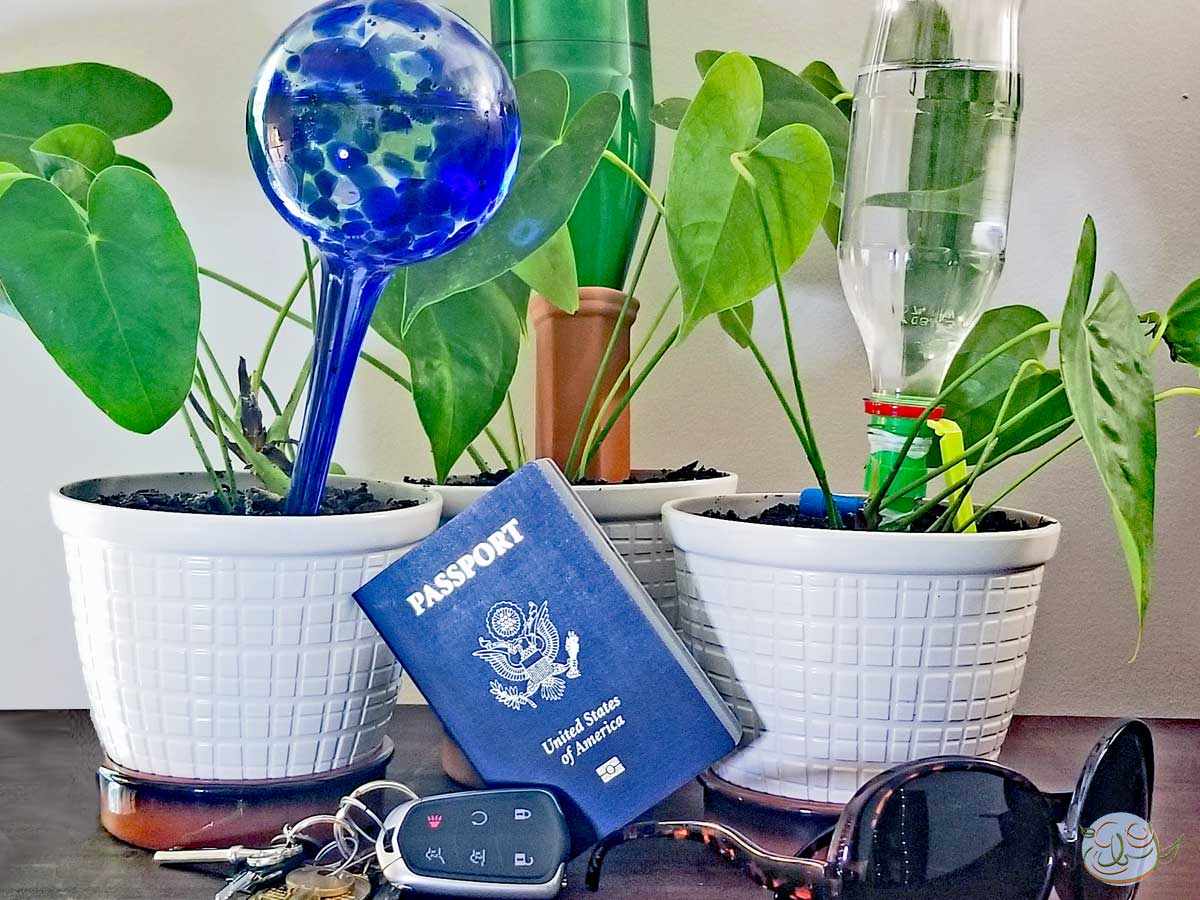
Who doesn’t want to take a vacation for a week or more? Anyone who lived through the pandemic can understand the freedom that comes from being able to travel. But what if you have plants? Plants don’t water themselves! (Or do they?) Hiring a plant sitter when you’re vacationing is a fine option to those with money to spare. Friends or family in your local area might be willing to plant sit, but that requires a lot of trust. We all know someone (or have been that person) who asked a friend to look in on their house and plants while away, only to find upon returning from vacation that the friend never showed up at all. It’s a great way to kill a friendship … and your plants.
Trust and money are hard enough commodities to come by. Instead, set your plants up so they water themselves! There are lots of ways your plants can self water while you’re gone. Here are our tips and tricks for keeping your garden watered when no one is going to be home to supervise them:
Before You Leave On Vacation, Overwater Your Plants

I know. This seems counterintuitive to every piece of advice any gardener or garden blog has ever given you. Trust me, I’m a random stranger on the internet (I am, but you can trust me). It truly works and I’ll tell you why.
Overwatering saturates the soil, which in general isn’t a good thing for your plants at all. However, plants have survived for thousands of years in torrential downpours for days without dying. They can handle a few days of flooding and come out on the other side just fine. Water your plants heavily all the way up to the moment you’re about to leave the house. In fact, once you’re packed for vacation, the car is loaded, the house is set to energy saver mode, and you’re about to walk out the door and turn the key, take a few moments to water your plants one more time.
All that said, don’t start overwatering your plants more than 3 days in advance of your vacation. If the drip trays under your plants start filling up with water during this phase, back off the watering. You don’t want to starve your plants’ roots of oxygen, but they’ll be fine for 3 days of what they’ll consider torrential rain.
Set Your Plants Up to Self Water While You’re On Vacation
As previously mentioned, trust and money are hard enough to come by. Water your plants yourself on the cheap with some simple ‘do it yourself’ methods. Or go all out and invest in manufactured alternatives. A self watering system while you’re on vacation is essential for your plants. There are several ways to set up a self watering process before you leave. From cheap to (mildly) costly, here’s 4 methods to water your plants while you’re away on vacation:
Fully DIY Self Watering: String Wicking

All you need is a bowl or bottle and some thick string. A cotton twine at least 1/4″ thick is best and can be purchased extremely cheaply. I bought mine for under $4 USD. Fill a bowl, vase, or empty soda bottle with water and set it near your plants. Cut lengths of string long enough to drop all the way down into the bottom of your reservoir and into each of your plant pots. You may want to wind a length of it around your plants’ stem, close to the surface of the soil.
How This Method of Self Watering Works
The capillary effect causes the dry string to soak with water. The water then travels along the string to the plant. The very act of your plant drinking the water suctions the water from the reservoir and into your plant pots.
Downsides of String Self Watering
This is a good method, but it has some drawbacks. If the air is very dry where you live, your string may dry out before the water can get to your plants. Plus, you will inevitably lose some water from the reservoir and string to evaporation.
On the other side of the spectrum, cotton twine can become moldy because it is consistently wet and out in the open. This makes it an ideal place for mold to grow. [You can read more here about the downsides of mold on your plant and what to do about it.] If you use this method, your plants should be fine, but remove the string as soon as you get back from vacation.
Note, once you remove the string, don’t throw it away! Watering strings like these are washable and reusable! You can wash them in a sink by hand or zip them up in a mesh laundry bag and throw them in the washing machine and drier. The strings will be like new and you can use them again and again. This makes this method an economical and environmentally friendly choice.
Partially DIY Self Watering: Bottle Spikes

For about a $7 USD investment, you can get set of 6 bottle spikes that will allow you to turn plastic water bottles into a self watering vacation plant saver without the hassle of drying-out or moldy strings.
How Bottle Spikes Work
Fill a used (and washed!) plastic bottle with water. Different brands of soda or water will have different sized openings, but most bottle spikes on the market will fit. Insert the bottle spike into the neck of a filled water bottle and secure it tightly. Turn the bottle over and puncture a few holes in the air-filled portion to allow air in (this allows water out the spigot). Stab the spiked end into the soil (you may have to prop it up if the bottle is on the larger side). The spigot along the side of the bottle spike will slowly release the water stored in the bottle over the course of several days and keep your soil watered.
The water evaporation problem that occurs in string wicking is non-existent with this method. The water bottle entirely encases the water within and, as the spout releases water, it trickles directly into the soil.
Downsides of Bottle Spikes
Unlike the string self watering method, bottle spikes may overwater your plant while you’re on vacation. The water from a bottle spike will dribble out into your soil at a slow but even pace. This waters the soil even if the soil is already drenched and may cause leaks onto the floor while you’re away.
(In fact, this recently occurred to me after this post was already written. I became distracted with editing this post’s pictures after the photo shoot. Despite knowing better, I neglected to remove the bottle spike from the anthurium and, as warned, it did leak water all over my dresser. I thought this addendum was appropriate.)
For this reason, I don’t recommend this option. But since I’ve tried this version myself, I would be remiss in not mentioning it.
Another Partially DIY Self Waterer: Terracotta Bottle Spikes
On the marginally expensive end of the scale, there’s another version of the bottle spike mentioned above. For about $17 USD, you can get a set of 8 terracotta bottle spikes. These spikes function differently but still allows you to turn used bottles into vacation self watering systems for your plants. You can use plastic bottles like the bottle spike above with this method. But the terracotta bottle spike is robust enough to handle wine bottles or glass bottles from sparkling water. Glass bottles can look quite nice in your planters or garden.

How This Method of Self Watering Works
Like the bottle spikes, a recycled bottle serves as the reservoir for your plant’s water. Rather than fit into the neck of the bottle, the terracotta spike fits around the bottle’s neck. Fill your chosen bottle, plastic or glass, with water. Then, insert your bottle in the terracotta spike, turn it over, and press it into the soil of your houseplant.
Terracotta is a porous material that allows moisture and air through its surface, albeit slowly. As the plant drinks water and the soil dries, the capillary effect pulls moisture in the bottle through the terracotta’s pores and into the soil. With this method, it is impossible to overwater your plants. Your plants get the right amount of water as they drink it.
Downsides of the Terracotta Bottle Spike
Using a glass bottle may be really pretty in your garden or in a sunny window. However, glass is also heavy. You can really only use this method of watering with a heavy planter or raised bed that can handle the weight. Absolutely don’t use this with small pots or hanging baskets.
Beautiful (but not DIY) Self Watering: Water Bulbs
The self watering method we use involves the purchase of several water bulbs. Your plants need at least one water bulb for each pot. I recommend adding 2 or 3 to a pot if your vacation will last a week or more. You can find watering bulbs in plastic ($10 USD for a set of 6), but I generally attempt to avoid plastic in the garden. The watering bulbs we use are hand blown glass and run about $17 USD for a set of 4. They look like pieces of stained-glass art in your plant pots, especially when the sunlight cascades through the windows and lights them up.
These are such beautiful and utilitarian additions to our indoor container garden that we often use them in our plants even when we’re not on vacation for their aesthetic nature.

How This Method of Self Watering Works
Fill the bulbs with a steady, small stream of water from your kitchen tap. Once you’ve filled them with water, place them in the soil firmly. Be careful not to clog the opening with soil, though. You’ll know you’ve got it right if you see bubbles of air rise from the bottom into the main reservoir. This is best done if you water the soil first so it’s already saturated.
Like the terracotta bottle spike and the string wick, the capillary effect is in play here. As the soil dries out, it pulls water from the small opening to the plant’s roots. This keeps the soil properly saturated, but not overwatered.
Downsides of Glass Watering Bulbs
They are difficult to fill up because the openings of the long stem are so small. Each bulb is different because they’re hand blown, so the stream of water from your tap has to be different to fill them.
They are slightly top heavy and can come crashing out of your pots if not properly anchored. This has made more than a few messes on our floors. Worse, because the glass is so thin, they often break when they hit the floor sending shards of glass everywhere. If you intend to water with watering bulbs but have pets and/or children, use plastic rather than glass. They may not look as nice, but they’ll get the job done with minimal damage.
The Evening Before You Leave on Vacation
Harvest any produce that is ripe or almost ready to pick. This is especially true of any outdoor produce. You don’t want all your hard work and patience to go to waste. And you certainly don’t want your produce to become the snack of some helpful bunnies, birds, or deer. Picking peas, beans, tomatoes, peppers, etc. a little early and putting them in your crisper won’t harm them. They’ll be waiting for you when you get home. Any ripening they were going to do on the plant will easily happen off the plant while you’re away. You won’t lose anything by harvesting a little early.
That’s really all there is to it. Your plants will survive just fine while you’re on vacation if you follow these three, simple steps.
But wait! What About the Outdoor Plants?!

Mother Nature is often your best friend on this one. Check the weather forecast for the period that you’ll be gone. If it’s going to rain at any time while you’re away, you’re golden. Your plants will be fine. If it’s not going to rain, give your plants a little love by setting up some water bulbs or bottle spikes before you leave. Basically, give your raised beds or outdoor garden some help with the same extended self watering techniques listed above.
Relax! Your Plants Will Be Fine While You’re On Vacation
My husband and I used these tips a lot when we were moving ourselves and our plants cross-country. We would often leave our plants for over a week at a time. These were working vacations away from our plants. At the time, we were searching for someplace we might want build our gardens. It was counterintuitive to leave our plants to try to find the perfect place to build our gardens while simultaneously being irresponsible with the garden we were growing at the time. Setting up a self watering solution was our only option.
Our longest stretch away from our plants has been a week and a half. We always return home from vacations to find our plants as happy as when we’d left them. No plant sitter required, no familial hard-feelings, or any friendships lost.
Follow these steps and you’ll come back from your vacation refreshed having not worried about your plants. And your plants will have enjoyed life quite happily without you. Don’t worry, they’ll be glad you’re back too.



One response to “How to go on Vacation Without Hiring a Plant Sitter”
[…] easy way of managing your plant’s reduced water needs is to use a self-watering system like glass water bulbs or terracotta bottle spikes. These methods only release water into the soil […]