
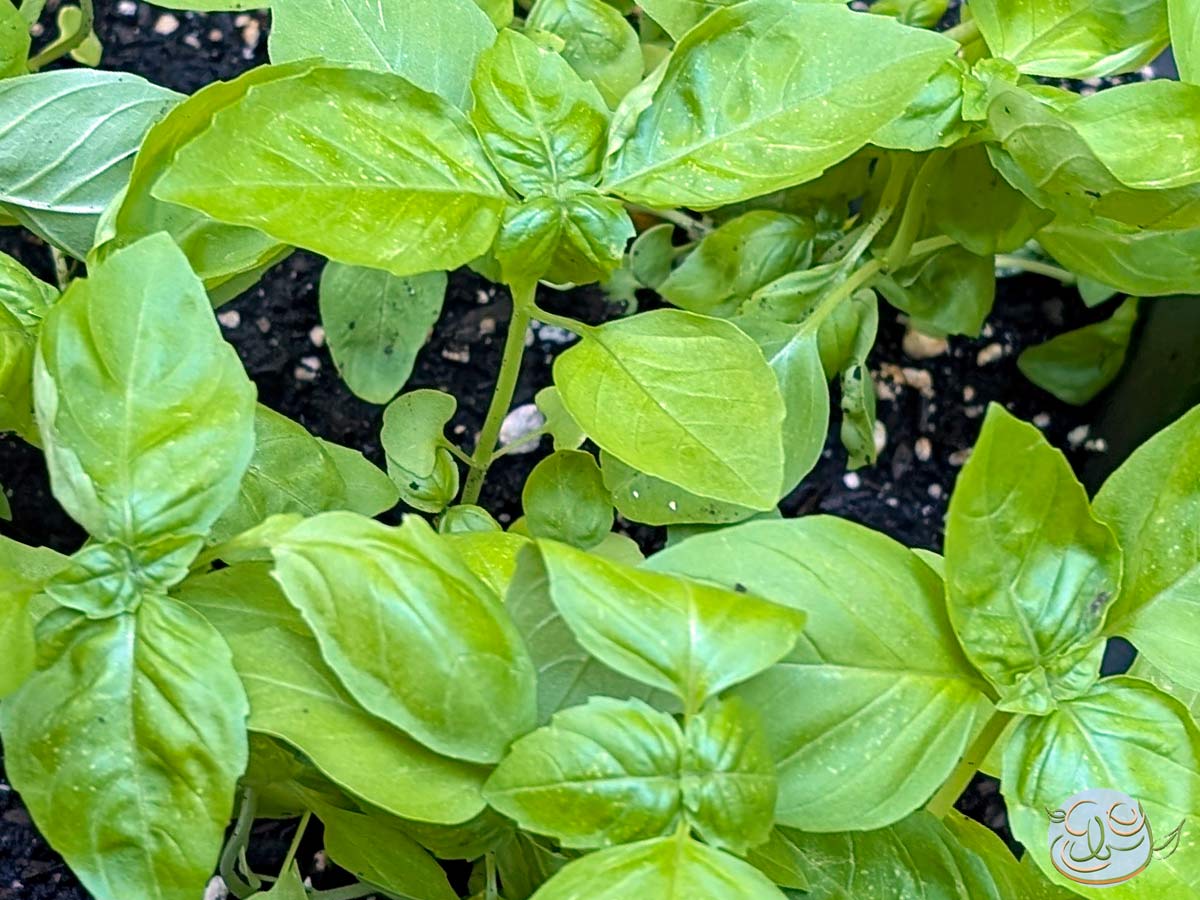

Growing basil is a delightful and rewarding experience that brings the joy of fresh, home-grown herbs right to your kitchen. With its relatively simple care requirements and the immense culinary value it offers, basil is a must-have for any herb garden.
By following the tips and guidelines outlined in this article, you’ll be well on your way to cultivating healthy, vibrant basil plants that will enrich your dishes and elevate your cooking.
What Is A Basil Plant?
Basil plants are a tropical or sub-tropical herb native to Asia and Africa. Basil is also considered a succulent due to the amount of water content contained in the fleshy leaves. While it’s considered an annual due to its extreme susceptibility to cold, basil can be a perennial outdoors in growing zones 10 to 11. When kept indoors, even in colder growing zones, basil plants can last years. We’ve grown basil shrubs for up to 5 years indoors in growing zone 6a.
[Did you know the USDA updated the cold hardiness zones in November 2023?]
Older basil plants show their status as a shrub rather than an herbaceous plant. When allowed to grow longer than a year, basil plants produce sturdy trunks of wood.

As a shrub, basil tends to grow vertically, rather than round, though some varieties differ.
Types of Basil
Depending on your definition, there are between 50 to 150 different varieties of basil. Most of these varieties are cultivars or hybrids of the common Sweet Basil (Ocimum basilicum). Common cultivars you may be familiar with include Genovese basil, Thai basil, Greek basil, red rubin basil, or purple basil. Sweet basil can be any color from bright green to deep purple.
There’s also the American Basil (Ocimum americanum) cultivars. These are your lemon and lime basils which have a tangy scent to them.
Then there are bush basils (Ocimum minimum) which form tiny leaves in a compact bush rather than tall stalks.
Growing Basil From Seed
Basil can be propagated either by seed or cuttings. If allowed to flower, basil plants will eventually produce small, white flowers at the tops of their stalks. This process of producing seeds is called bolting.
Basil seeds are small, black oblong in shape. They’re considered a small seed at approximately 1.3 x 2 millimeters in size.

As a heat loving plant, basil seeds germinate best in hot, humid conditions. A heat pad or greenhouse lid over your basil seeds can help to germinate them faster. Basil grows extremely quickly and can be ready to harvest in as little as 3 to 4 weeks after sowing.
If you’re planning on growing your basil from seed outside, wait until the danger of frost has passed and the temperatures are at least 59°F (15°C). If growing indoors, you can plant basil at practically any time, provided they receive enough light from a sunny window or grow lamp.
Growing Basil From Cuttings
There are lots of reasons to grow basil from cuttings rather than from seed. One obvious reason is that the seeds are so small that they’re difficult to gather. Also, basil leaves tend to turn more bitter and the plant produces less leaves once the plant has bolted. So, you’re less likely to enjoy the basil plant while it is producing seeds.
Happily, basil grows very well from cuttings! Like tomatoes, basil plants have root nodes all along their stems. The root nodes are hidden in younger growth, but as the plant ages, the root nodes become easier to see.

Like a lot of different plants, basil grows roots very well in water. Propagating plants in water is a simple process. If you have an older basil plant, you want to make sure you pick a cutting from a part of the stem that isn’t woody yet. This means cutting from the younger, greener growth.
For your cutting, you want a longer stem with at least two leaves on the top. Longer stems are best because they allow more probability that there will be nodes to produce roots. Also, you want to keep the leaves out of the water. If there are any flowers on your stem at the top, cut those away as well. Then just place in water and wait for the roots to grow!
Light Requirements for Growing Basil
As a tropical/sub-tropical plant, basil loves heat and light. Ideally, a basil plant should receive between 6 to 8 hours of sunlight a day.
However, in areas that receive greater sunlight, there’s a bit of a balancing act for basil. You also want to make sure your basil doesn’t get sunscald either. A little shade can prevent basil from burning in the sun.
Water Requirements for Growing Basil
Basil is pretty forgiving about where it grows. It loves moist soil, so if you’re planting in a container, be aware that some containers have a tendency to dry out quicker than in the ground. Water at least 3 times a week to keep the succulent leaves full of water and a tastier harvest!
Basil and Garden Pests
Basil is a wonderful plant for the garden since it can provide a natural defense barrier for your garden. A lot of insects that would normally plague your garden won’t go near basil because of its pungent scent.
It’s a natural deterrent of tomato hornworms and mosquitoes so it’s great to plant among your tomato plants or as a border to your patio.
There are some insects that love basil, however. Aphids, whiteflies, and spider mites are frequent basil pests. They love to feed on the succulent leaves as much as we do. Basil leaves are highly porous and have little waxy coatings to protect themselves. So a healthy basil plant is an easy buffet.

Most basil pests hang out on the undersides of the leaves. So if you see signs of yellowing, wilting, or holes in your leaves, check the undersides of your basil plant.
If you find signs of infestation, spray with a very mild solution of water with vinegar or rubbing alcohol. Basil leaves are extremely porous, so don’t make your solution too heavy on the vinegar or alcohol or you risk burning your basil leaves too. Heavier solutions involving neem oil or even Castile soap are inadvisable due to the basil’s delicate nature. A little goes a long way to battle basil pests.
How to Harvest Basil
Basil is a magical herb in that the more you harvest it, the more the plant will produce. Harvesting basil the right way encourages the plant to branch and grow thick and bushy. With each new branch, more basil leaves grow, offering a practically endless supply of this delicious herb! Like the mythical hydra of Greek mythology, cut one head off and two more grow.

You want to harvest your basil from the top down. Locate a stem with full basil leaves and look below them to find the next lower branch of leaves. Cut above those lower leaves, leaving a little of the stalk behind. New leaves will form in the branches of the stalk and the leaves.
Those new leaves then grow into branches of their own, producing new heads of basil leaves. You can then trim these similarly, allowing each branch to remain and branch again. Consistently pruning basil in this way ensures the plant will become full and bushy, producing more basil leaves geometrically as the plant grows.
What To Do With Harvested Basil
The main reason basil is such a delight to grow in the garden is because it is such a versatile ingredient in the kitchen. Fresh basil leaves are excellent in salads, flavoring pizzas, sauces, and meats, swirled into cocktails or mocktails for a refreshing treat, or making into basil pesto, of course! Dried basil can be used similarly on pizzas or sauces, or mixed into olive oil infusions as an appetizer for fresh baked bread.
How to Dry Basil
Basil leaves are so fragrant that they naturally maintain their flavor when dried. When harvesting your basil leaves for drying, simply remove the leaves from the stems.
If your basil plant has gone to flower and bolted, don’t throw away those flowers! Like a lot of herbs, basil plants have edible flowers. There’s a lot of essential oils in basil flowers and florets. Use them fresh and adorn a salad, or go ahead and dry the flowers too just as you would the leaves.
You can dry the stems and use them too. There are still some essential oils in basil stems that is worth using. But basil stems can be tough and woody. So, if you’re planning on using the stems, it’s best to grind them into a basil powder after they’ve dried. This powder is useful in soups and stews throughout the winter months.
There are a lot of different ways to dry basil. The easiest method is simply lay them out on a paper towel or light cloth and allow them to air dry. This method is easy, though it does lose some of the essential oil as the water evaporates.

To keep as much of the essential oil as possible in your dried basil leaves, you can dry them in the oven. Lay your leaves out on an oven-safe tray lined with parchment paper. Set your oven to 200°F (93°C) or your oven’s lowest heat setting. Set a timer for a couple hours and keep an eye on your leaves to avoid burning. Smaller leaves will dry faster than larger ones.
Freezing Basil
You can also preserve basil by freezing it. Because your basil’s essential oils aren’t evaporating (either in the general air or in your oven), freezing basil can preserve the flavor more than drying does.
Harvest your basil leaves from the stalks and rip them into small pieces. Place these pieces in an ice tray and cover with either water or olive oil. Most recipes that call for basil also call for olive oil. So it’s a safe bet that if you’re going to use this basil in future, the olive oil is a good addition.
Once your basil cubes have frozen, you can pop them out of the ice tray and place them in a bag to freeze. This frees up your ice tray to freeze more basil!
Conclusion
Whether you’re harvesting leaves for a quick caprese salad or preparing a batch of homemade pesto, the satisfaction of using basil you’ve grown yourself is unparalleled. So, get started today, and enjoy the fragrant and flavorful benefits of your own basil garden!
Let us know how you use fresh basil in your kitchen and what varieties you’ve encountered. Got a basil story from your own garden? Leave a comment and let us know!



One response to “Bountiful Basil: Easy Tips for Growing Basil in Your Herb Garden”
[…] they pair well with legumes like beans and peas which return nitrogen to the soil. Most herbs like basil, will also perform well alongside habanero […]