
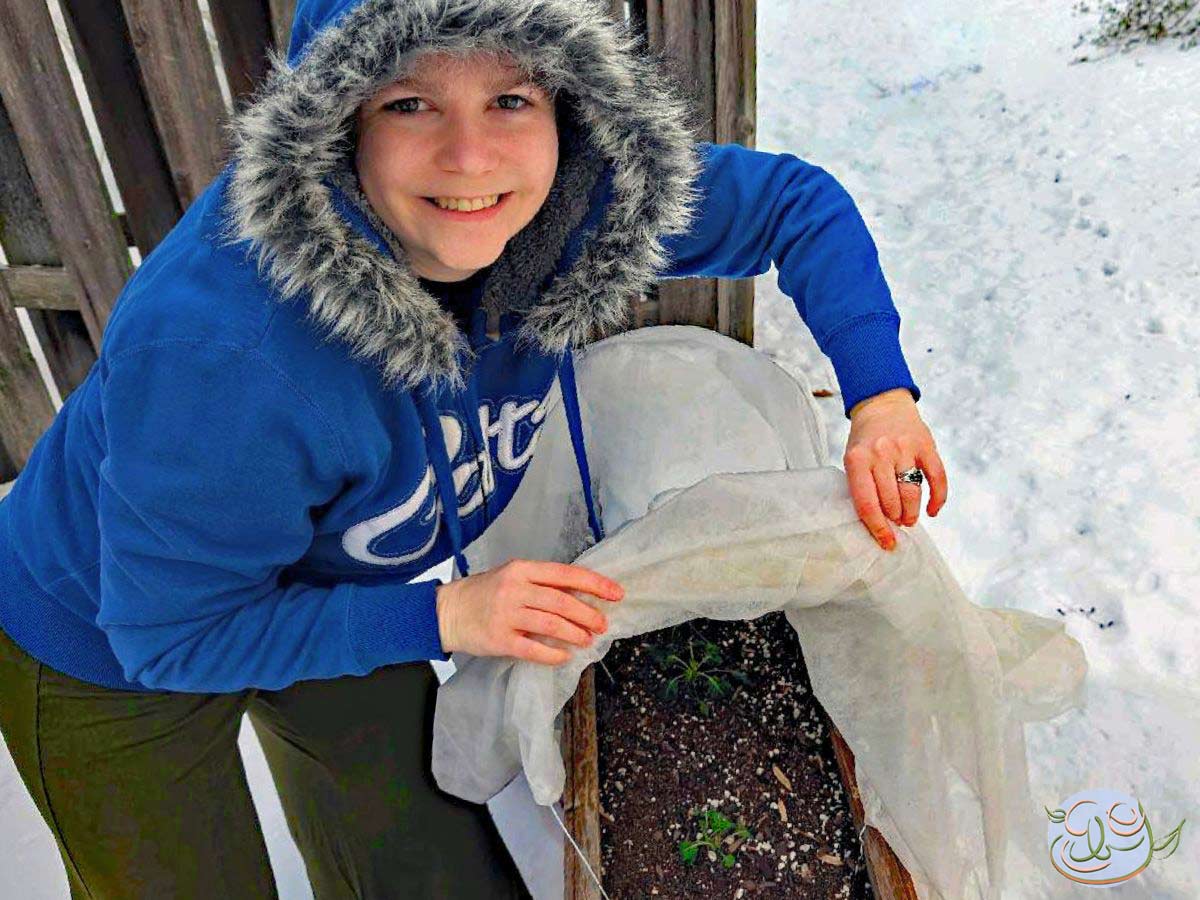

Most of us have been told that you can’t garden outside all year round. This is especially true to those of us who have spent considerable time in the colder parts of the world. It’s ingrained in most gardeners’ minds that winter gardening is impossible during the coldest months of the year – inside, sure, but outside? Ridiculous! Some will even go so far to tell you that you shouldn’t try to garden outside in the winter, that the soil needs its rest just like we all do. As a skeptical data analyst by nature, I’ve never been one to take anyone’s word for anything. So, during this past winter, I performed an outdoor garden experiment to put this collective “wisdom” to the test.
To be fair, I currently live in a fairly mild part of the world, weather-wise. Officially, my USDA Plant Hardiness Zone is 7b. The mid-Atlantic seaboard receives relatively gentle winters compared to other parts of the country. In fact, most locals considered the 4 inches of snow we received this winter extreme. All the same, our outside garden has usually slept during the winter, waiting for the glorious days of spring when life starts to return to the dull, brown-gray world. Until this winter, anyway.
I first got the idea of gardening in winter when a fellow gardener mentioned Eliot Coleman’s book Year-Round Vegetable Production (Bookshop.org affiliate link). In this book, Coleman shares insights, tips, and tricks that he’s learned at his commercial farm in mid-state Maine. I picked up the book at my local library. This book is gold! I cannot recommend it more highly.
What to Plant in a Winter Garden

Some plants are more hardy in the winter than others. Tender plants like tomatoes and peppers break down in a freeze. Other vegetables like squash are fine for one freeze, but you must bring them in and eat or preserve them immediately following. Relatively few plants are totally fine with winter weather and fewer still shrug off frost and snow. So It’s important to know what plants can survive the winter outdoors in a garden.
Some plants tolerate frost and snow well. Root vegetables like turnips, onions, potatoes, leeks, and radishes sit below the surface of the soil. So, the produce is largely protected against the winter wind. Still, you have to consider the leafy greens that give those produce their nutrients. If protected from wind, some varieties of legumes are also worth consideration like beans and peas. Brassicas like Brussel sprouts, broccoli, chard, and cauliflower are dense vegetables that are tolerant of frost and even snow.
Even if you’re not planning to garden in the depth of winter, you can still get one more harvest in before the snows hit, if you plant cold-tolerant crops. Fast crops that mature in 6 weeks or less are ideal – like radishes. I grew snow peas at the end of the last gardening season (mostly for its nitrogen-fixing properties). Then I decided to commence my winter experiment with that most notorious of winter-tolerant plants: Kale.
When to Start Seeds for Outdoor Winter Gardening

August is the ideal time to plant your winter vegetables. Your garden may not be done yet, but it is slowing down. Late summer is the time to initiate plans for the winter garden. If direct-sown in August, seeds will germinate quickly. Seedlings establish themselves in the hot months. Once the cold months arrive, the plants will be hardy and capable of withstanding the winter.
I admit that I was a little late starting my own winter gardening experiment. I sowed my kale seeds on October 2nd, which was too late for the seedlings to really become established before true winter arrived. Even so, with a little help from a frost cover, my kale seedlings survived and even grew throughout the winter months.
How Cold is Too Cold for Winter Gardening Outside?
Most plants don’t do well once the average daily temperature drops below 50 degrees Fahrenheit (10 degrees Celsius). Cold-tolerant plants are largely ok with temperatures as low as 35 degrees. However, the trick here isn’t the temperature itself, but the air.
Wind and cold air have a desiccating effect on plants. That means that it dries them out. In summer, warm winds have the ability to carry moisture in the form of humidity. In winter, air loses that ability and instead dries out anything it comes into contact with. Your skin feels drier in winter, right? Plants have the same problem, and they don’t have the ability to apply moisturizers to help them out.

Creating a wind baffle can help deter some of the wind. Planting against a fence that shields the northern and western winds can help. Covering plants (even cold-tolerant plants) with frost covers will protect them from the air even more.
Contrary to what you might think, snow is actually a fantastic insulator. Snow creates a baffle against the cold air in winter and provides a warm insulation to cold-hardy plants. Snow traps heat in the soil and acts as a blanket, preventing the heat from escaping into the air and dissipating. As long as they can get enough light through the snow, many winter plants will do better against the cold with snow than without it.

How Much Sunlight Do Plants Need in Winter?
Cold is only one aspect of gardening outside in winter. Once the sunlight in an area drops below 10 hours a day, many plants slow or even stop their growth for the season. This winter timeframe is known as the Persephone Period, and it’s different for every gardener depending on their area’s latitude on the globe.
Because plants grow more slowly in winter, you will water, fertilize, and harvest your plants less during the Persephone Period. All the same, cold-hardy plants will still survive the dark days of winter even with less light.
Do Plants Need Water in Winter?
Short answer: yes. Long answer: it depends. If you cover your plants from the wind, your plants will need less water since they’ll experience less drying out. However, they may also be protected against any rain or melting snow and ice. Be sure to check on your plants regularly to make sure the soil isn’t dry. If it is, give them a little water during the heat of the day. Strange but true: water actually gives off a little heat as it freezes due to the water molecules being compressed.
Don’t overdo it though! Because plants slow their growth during winter, they also don’t need as much water and nutrients as they do during the growing season. Even if you don’t get adequate snow or rain in your area, watering an outdoor garden once a month is usually sufficient in winter.
Early Spring Harvest

The best thing about a winter garden is the early spring harvest. Though I planted my kale a little late, they’re going to be perfect for an early spring harvest in March, when most other seedlings are just emerging from the soil.
Cold-hardy vegetables generally don’t do well in summer’s heat. So it’s good to harvest them when the weather is cool. Harvesting winter-growing plants early also frees up that garden plot for quick-growing summer veg like lettuce, summer peas, or tomatoes. Just be sure to replenish the soil with fertilizer to replenish the nutrients. Add nitrogen with coffee or phosphorous with composts. Vegetables that love the cold are usually nutrient leeches. Make sure your summer crop has what it needs after harvesting your winter bounty in the spring.
You Can Garden In Winter!
Don’t lose precious time! Don’t sacrifice your winter months. Plan your garden well and you can garden in the winter. Even if you don’t get produce in the winter, you’ll be well set for tasty home-grown food in the early spring. And imagine seeing green produce growing in winter while all the world is grey, brown, or white. Gardening in winter is a reward all on its own.



2 responses to “Gardening Outside in Winter: Extend Your Garden Season From Months to All Year Round”
[…] fruits and vegetables take a front seat to any spring garden plan. We also had to take our winter gardening experiment into account. Knowing we have curly and Portuguese kale already in the garden adds some complexity. […]
[…] warmer climates, or if you place your kale under a frost cover (like I did), you can harvest your kale leaves all winter long! Kale grows slower in the lower levels of light […]