
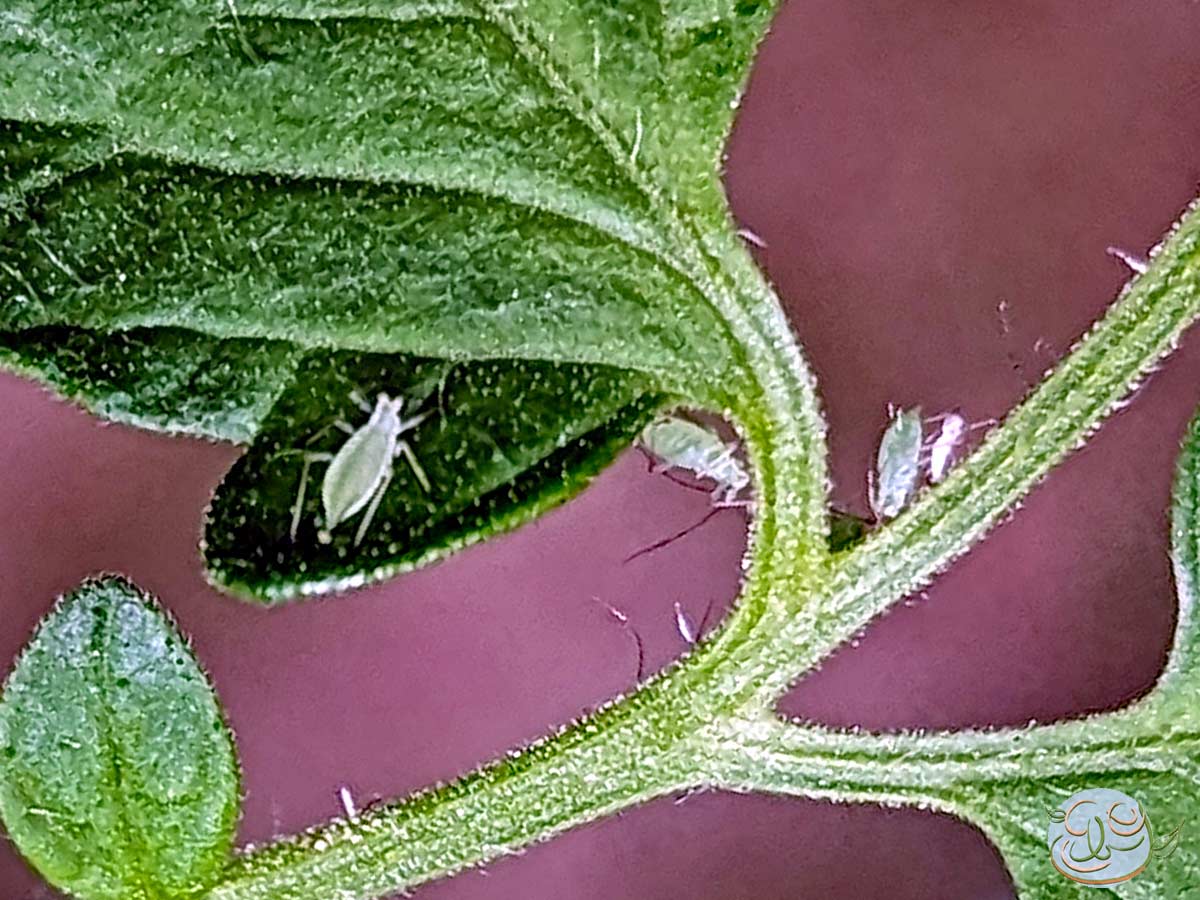
Typically appearing in Spring from late May to early June (in the Northern Hemisphere), aphids are a common but nasty insect that feasts on all kinds of garden plants. Aphids are not just a frustration for Wordle fans of July 21, 2022, but for gardeners as well. Once aphids make their home on your plants, without intervention they kill even well-established plants dead within a month.
Aphids make up the superfamily Aphidoidea which accounts for over 4,000 different species. Aphids can be many different colors: black, green, yellow, brown, or red. They can be smooth or even wooly in appearance.

Aphids are extremely small. Their bodies are only about 2 millimeters wide and 3 millimeters tall. So, you may first notice the damage they cause on your plants before you notice the insects themselves. Aphids leave splotches of white or yellow on the leaves of the plants that they feed on. These are areas where aphids, like tiny vampires, have bit into your plants and drained the portion of the leaf dry. Aphids typically gather on stems or undersides of leaves where predators will less likely locate them.
Plants Aphids Like (and Don’t Like)

I have personally observed that aphids love succulent plants like tomatoes, dill, and mint. They will flock to those plants over others. A gardening method called trap cropping suggests planting certain plants in your garden that insects like far away from other plants that are susceptible as a sort of decoy. Dill would be a good trap crop for aphids.
Some plants that deter aphids are marigolds, garlic, and catnip. In well-established gardens, you may find marigolds planted as a border. This acts as an invisible barrier against a variety of harmful pests, aphids included.
Friendly Garden Aphid Hunters
Not all insectoid visitors to your garden are bad! You may have already noticed some newcomers to your garden that weren’t there before. They’re likely already feasting on the aphids that are feasting on your plants. Here’s a few of my favorite little allies in the war against aphids (and other garden pests too):
Ladybugs / Ladybird Beetles

The number one hunter of aphids is most certainly the beautiful ladybug (known as ladybird beetles among most of the rest of the English-speaking world). Due to their popularity in children’s books, it’s rare to find someone not familiar with ladybugs in a garden. Ladybugs are prime hunters of many small garden pests and are front-line warriors against aphids. If you haven’t seen a ladybug in a while you can even order them and have them delivered to you! One of the surest and safest ways to get rid of aphids on plants is to release ladybugs into your garden.
Be careful, though! Make sure you’re looking at the right kind of ladybug! Some not-so-nice insects like to masquerade as the friendly ladybug, but are actually harmful to humans and their non-native environment. North America has been infested with the dreaded Asian Lady Beetle for decades. It’s key that you know which is which.
Harvestmen

Commonly known as “daddy longlegs” spiders, harvestmen are not actually spiders at all. They have a circular body rather than a segmented one and they don’t spin webs. Rather, they rely on their long-legged speed and agility to hunt their prey. They pose no danger at all to humans because their mouth is too small to bite through skin. These delightful garden friends love to eat small insects like aphids and white flies that plague your garden.
Assassin Bugs

These cool looking bugs can be found almost anywhere in the world with over 160 species native to North America. True to their name, they are super helpful in the war against aphids, white flies, and other garden pests. They’re generally friendly to humans and are smart enough to understand their surroundings and when you approach “their” territory. Gardener beware, though! These creatures aren’t just painted bright colors to look cool. If threatened they will bite humans and that bite is venomous. If you see them in your garden, leave them alone and give them a wide berth. They’ll move on by themselves once they’ve eaten your aphid buffet.
Unfriendly “Helpers” (Ants)
For all the helpful garden insects that may assist with the removal of aphids, however, there are insects that encourage aphids. Certain kinds of ants live in symbiosis with aphids and will actively herd the smaller bugs for their own use.

When the aphids feast on your plants, they excrete an oily residue called honeydew from their bodies. This honeydew is damaging to your plants as it encourages fungus to grow on leaves. It is also sweet to ants. Ants love this sweet nectar and so they’ll make a point to farm the aphids for honeydew, encouraging them to produce more. Just like farmers milk cows, ants will truly “milk” the honeydew from aphids. The presence of ants, in turn, benefits the aphids. Just like the Marvel Ant Man movies, ants are extremely aggressive in real life. They’ll frighten away helpful insects like ladybugs that are trying to eat the aphids.
This symbiosis is called mutualism, and it does no good to have ants and aphids team up against you and your plants. If you see ants all over your plants, immediately check your plant for aphids.
Sprays That Kill Aphids on Plants

Most remedies for aphids on plants will be the same for other insect infestations. Aphids, like Spider Mites and other baddies, have soft, porous, fragile bodies that they breathe through. This means that they are susceptible to ingredients that either dehydrate them or inhibit their ability to breathe through their skin. Be careful, though! Some of these sprays are just as harmful to your plants as they are to the aphids attacking them. Be sure to heed the dosage amounts and dilute your sprays with water appropriately.
No matter which of the solutions you try below, be sure to follow these tips:
- Spray in the early morning before the dew has evaporated or in the early evening before the dew falls. Never spray in the heat of the day or when your plants are in full sun or you risk burning your plants.
- Be sure to spray the undersides of the leaves and the stems where aphids like to hang out.
- Let the solution of your choice sit on your plants for at least 15 to 20 minutes.
- After the spray has sat a while, spray your plants with a garden hose or with another spray bottle of just water to rinse the solution away.
Death by Dehydration
These methods work by sapping the moisture directly from the aphids’ bodies. Essentially, these methods inflict a little poetic justice. These sprays do to the aphids exactly what the aphids are doing to your plants.
Rubbing Alcohol
For a very light infestation of aphids on plants, you can use direct rubbing alcohol (C3H8O) on a paper towel and wipe down the infected leaves. However, this is time consuming and you may not catch every infected leaf, especially if the aphid infestation is much larger.
For large aphid infestations on plants, you should use a spray mixture. Rubbing alcohol (isopropyl alcohol) is usually 70% alcohol already, but you still need to dilute it further to make sure it doesn’t harm your plants. Use 2 parts rubbing alcohol to at least 5 parts water. This equates to roughly 1/2 cup of rubbing alcohol to at least 2.5 cups of water.
White Vinegar
Vinegar is less harmful to your plants than rubbing alcohol and so can be used at a higher ratio. A ratio of 1 part white vinegar to 3 parts water will usually do the trick. This equates to about 1/3 cup of white vinegar to a cup of water.
Hydrogen Peroxide
Even less harmful than either rubbing alcohol or white vinegar is hydrogen peroxide. Hydrogen peroxide (H202) is usually sold in stores at a 3% solution already. Even so, you should still dilute it with at least an equal measure of water before you apply it to your plants. 1/2 a cup of hydrogen peroxide to at least 1/2 a cup of water should do the trick.
DIY Onion/Garlic Spray
For a fully plant-based method of getting rid of aphids on plants, you can make your own spray with onion and/or garlic water. Chop up 1/2 a white onion and/or 3 cloves of garlic per two cups of water and let the solution sit for at least three days. The oils of the onion and garlic are caustic to aphids, but being vegetable in nature, are less harmful to your plants.
You can also use a small sauce pan and boil the onion and garlic in water on a stove to achieve a faster solution. Just be sure to let the solution cool before you spray your plants. Otherwise, while you’ll kill the aphids for sure, you’ll also boil your plants.
Death by Drowning
These methods essentially do the opposite of the methods described above. These sprays congeal around the aphids’ soft bodies and slowly asphyxiates them. It only works when it comes into direct contact, but it most certainly does work.
Again, as mentioned above, never use these methods in direct sunlight or let your plants sit in the sun while being drenched. These solutions will act as a magnifying glass to the sun’s rays and burn your plants’ leaves. If it’s not going to rain or dew when you treat your plants for aphids, spray the plants down with water after 20 minutes or so to wash away the oil … and the corpses of your aphid enemies.
Neem Oil
Neem oil is a natural oil from the seeds of the neem tree, an evergreen found in the Indian subcontinent. Use a ratio of 1 part neem oil to 4 parts water, equating to 1/4 cup neem oil to 1 cup of water. If your plants are indoors, take them outdoors before spraying them. This will result in a lot less icky cleanup for you on your windows and walls, trust me.
Dish Soap
You can use everyday dish soap from your kitchen to create a spray that will do the same thing as neem oil. However, most dish soap has elements like sodium (salt) that can be abrasive to your plants. If you have the option, Castile soap is far better for your plants. Castile soap is a kind of soap that is made entirely from vegetable and fruit oils and so it’s much softer to your plants. Whichever soap you end up using, a couple of drops of soap in a quart of water will go a long way. So make sure not to use too much.
Defending Your Plants from Aphids
For all its delights and pleasures, gardening is also warfare. Armed with these tips, you’re ready to go out into your garden and defend you plants from the dreaded Aphid. Be sure to leave a comment if you’ve tried these suggestions and if they worked for you!



7 responses to “Plant Lice: The Dreaded Aphid”
[…] of the insect friends a gardener can have is the beautiful ladybug. They are the primary hunter of aphids and eat a number of other common garden pests. Popularized in children’s stories, ladybugs […]
[…] are a lot of different ways to combat aphids. I’ve previously listed methods to defeat aphids naturally. The key is to check your plants often for signs of aphids. If you catch them early, your chances […]
[…] mites are a lot like aphids in that they have soft bodies. These soft bodies take in oxygen from the air. So one way to kill […]
[…] pepper plants are susceptible to both aphids and spider […]
[…] well as for its culinary uses). Mint deters many varieties of spiders, as well as cabbage moths, aphids, whiteflies, squash bugs, and ants. There’s an area on our porch near the back door that used […]
[…] garden pests like whiteflies, aphids, and fungus gnats can live in the soil rather than under the leaves. They lay their eggs and […]
[…] on these guys enough this year (You can read all about it in the post I made earlier this year: Plant Lice: The Dreaded Aphid), but it would be remiss not to include them in this post for future […]